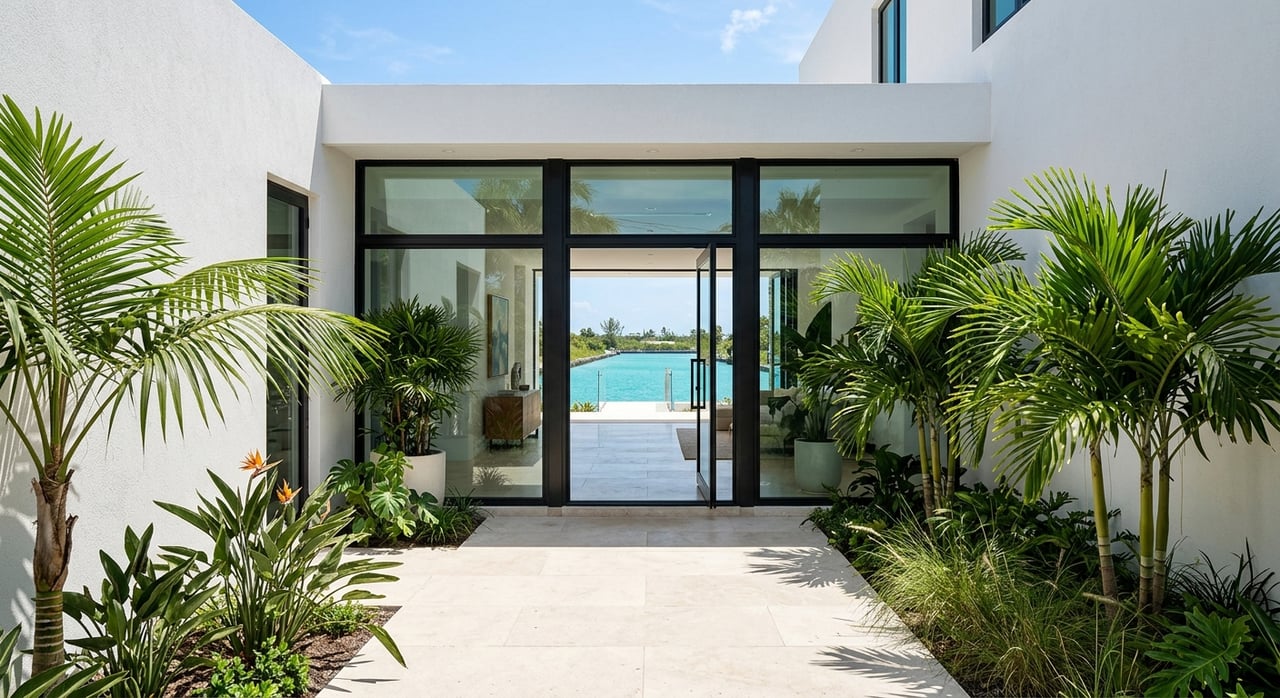
How to Build a Custom Waterfront Home in Lighthouse Point
April 16, 2026
April 16, 2026
If you are dreaming about a custom waterfront home in Lighthouse Point, it is easy to start with the fun part: the architecture, the dock, the pool, and the view. But in this market, the smartest first move is not picking finishes or sketching a floor plan. It is confirming that your lot can actually support the home you want to build. In Lighthouse Point, flood exposure, seawall condition, surveys, and permit requirements can shape the project from day one. Let’s dive in.
In Lighthouse Point, parcel verification comes before design. The city is almost fully developed, and its waterfront setting includes man-made canals, bulkheaded shorelines, the Intracoastal Waterway, and flood-prone conditions, according to the city’s adopted comprehensive plan.
That means not every waterfront lot should be treated as a clean slate. Before you invest heavily in plans, you will want to confirm whether the property supports your goals for the house, elevation strategy, and any desired dock improvements.
A current flood review is one of the most important early steps. Broward County’s flood-zone information notes that the current flood-zone map became effective July 31, 2024, and that base flood elevations must be used for new construction and substantial improvements.
The county also encourages flood insurance even when it is not required. For buyers and future owners, that makes flood data relevant not just for permitting, but also for long-term ownership costs and planning.
FEMA’s Flood Map Service Center is the official public source for flood hazard information. If you are evaluating a lot, this is one of the first places your team should reference while confirming the property’s flood exposure and elevation requirements.
Lighthouse Point states on its flood information page that it keeps FEMA elevation certificates for some floodplain properties and can provide them upon request for residential and commercial buildings.
That can be helpful when you are trying to understand the practical starting point for finished-floor planning. If an elevation certificate is already on file, your architect, engineer, and builder may be able to use it as part of the early feasibility review.
A recent survey is not just paperwork. In Lighthouse Point, it helps verify setbacks, elevations, property lines, lot size, and waterfront conditions before design work moves too far.
The city’s new residence and addition permit page requires recent surveys and site plans for a new single-family home. The city’s single-family residence requirements PDF is even more detailed and calls for surveys and site plans showing zoning setbacks.
Because the city’s online requirements are not fully identical across pages, the safest takeaway is simple: expect to need recent surveys and detailed site documentation, and confirm the current submittal count directly with Building and Zoning before you file.
On a waterfront lot, the seawall can affect far more than the edge of the property. It can influence engineering, permitting, timing, and budget.
Lighthouse Point’s permit guidance for new residences indicates that signed and sealed seawall-engineer letters are expected as part of the package for waterfront construction. The exact number shown online varies by city document, but the consistent message is that the seawall must be reviewed early, not after your plans are complete.
If the seawall condition is poor or if upgrades are needed, that may affect your construction schedule and your permit path. It may also influence how you think about docks, drainage, site work, and overall waterfront usability.
For that reason, many buyers are best served by treating the seawall as part of lot feasibility. It is not a minor detail. It is one of the key physical conditions that can shape whether a parcel is truly ready for a custom build.
Lighthouse Point’s waterfront setting is one of its biggest draws, but it also adds complexity. The city’s comprehensive plan explains that the Intracoastal Waterway runs the length of the city and connects with the canal network at several points.
That layout means canal-front and Intracoastal-adjacent parcels may function differently in practice. Your experience of access, exposure, and layout may vary by location, even though the citywide waterfront character feels cohesive.
If your vision includes a dock, vessel platform, seawall work, or other in-water improvements, those items may require approvals beyond the house permit. Broward County states that construction of docks, seawalls, floating vessel platforms, and similar in-water structures requires an Environmental Resource License.
The city’s dock and seawall checklist also requires outside-agency approvals from Broward County, the Florida Department of Environmental Protection, or the U.S. Army Corps of Engineers, depending on the work involved.
This is why dock planning belongs in your early feasibility review. It should not be treated as a simple add-on after the main house plans are complete.
The comprehensive plan also notes the city’s support for a year-round slow-speed 50-foot shoreline buffer along the Intracoastal Waterway. It further states that commercial or residential docks or docking facilities are prohibited in manatee Essential Habitat areas.
For a buyer planning a custom waterfront home, this reinforces an important point: water adjacency adds opportunity, but it also adds rules. Your lot’s location and your intended waterfront improvements should be reviewed together from the start.
In Lighthouse Point, custom-home planning is not a do-it-yourself submission process. The city states in its FAQs that a homeowner cannot draw up their own plans, and contractor registration is required before a contractor can pull permits.
That makes the early team especially important. Before you finalize the lot or commit to a design direction, you will usually want the right professionals in place.
This matters because Lighthouse Point’s single-family residence checklist requires signed and sealed plans, structural calculations, drainage plans, energy calculations, product approvals, truss plans, soil density tests, and county review before city building submission.
On waterfront lots, the seawall letters are added to that package. In other words, the lot, the shoreline condition, and the permit path all need to work together before your build can move forward smoothly.
Sometimes, but only within the city’s owner-builder rules. Lighthouse Point states that owner-builder permits are limited, and that electrical, roofing, and piling work must still be done by licensed contractors.
For many waterfront projects, piling and structural work are central parts of the build. That is one reason many buyers prefer to assemble an experienced professional team from the outset.
One of the most common mistakes in custom-home planning is assuming the timeline starts when construction starts. In Lighthouse Point, a more realistic view is that the timeline begins with due diligence and approvals.
A practical sequence often looks like this:
Broward County’s development and environmental review process describes a two-step approval path for new construction. The county also notes that approved plans become invalid if they are not submitted to the relevant agency within 30 days.
That timing detail matters. It means your architect, builder, and permit strategy should stay coordinated so approvals do not lapse while you are waiting on the next stage.
Lighthouse Point states in its FAQs that most permits are valid for 180 days, while demolition permits are valid for 60 days. If your start is delayed, renewals may be needed even after approvals are in place.
The city also states that beginning work without the required permit can trigger a stop-work order, a notice of violation, and additional fees. For a waterfront project, permit sequencing is not just an administrative detail. It is part of budget control.
If you are purchasing a teardown, vacant lot, or older waterfront property with plans to build new, the real first step is feasibility, not aesthetics. That means confirming the lot can support your desired home, flood-elevation strategy, and waterfront improvements before major design spending begins.
This approach can help you avoid costly redesigns, delays, or surprises after closing. It also gives you a clearer picture of what it may take to turn a promising parcel into the waterfront home you actually want.
For buyers exploring Lighthouse Point, that is where experienced guidance can add real value. A well-chosen lot is not just about the view. It is about the full path from acquisition to completion. If you are considering a custom waterfront opportunity in Lighthouse Point, the Tinka Ellington Group can help you evaluate the property through a strategic, waterfront-focused lens and guide your next steps with concierge-level care.
Stay up to date on the latest real estate trends.
We are committed to guiding you every step of the way—whether you're buying a home, selling a property, or securing a mortgage. Whatever your needs, we've got you covered.
Luxury Presence
101 N Federal Hwy 5th Flr Boca Raton FL 33432