Intracoastal And Canalfront Living In Delray Beach
June 18, 2026
June 18, 2026
If you are dreaming about waterfront life in Delray Beach, the first question is not just Which home do you like best? It is How do you want to use the water every day? Whether you picture long Intracoastal views, quick dock access, or a lower-maintenance boating setup, Delray offers several distinct ways to live on the water. This guide will help you understand the difference between Intracoastal and canalfront living, what to look for in a property, and which practical details matter most before you buy. Let’s dive in.
Delray Beach has a unique coastal layout. It sits along the Atlantic Ocean with the Intracoastal Waterway running through the city, creating a mix of open-water frontage, canalfront neighborhoods, and boating access points.
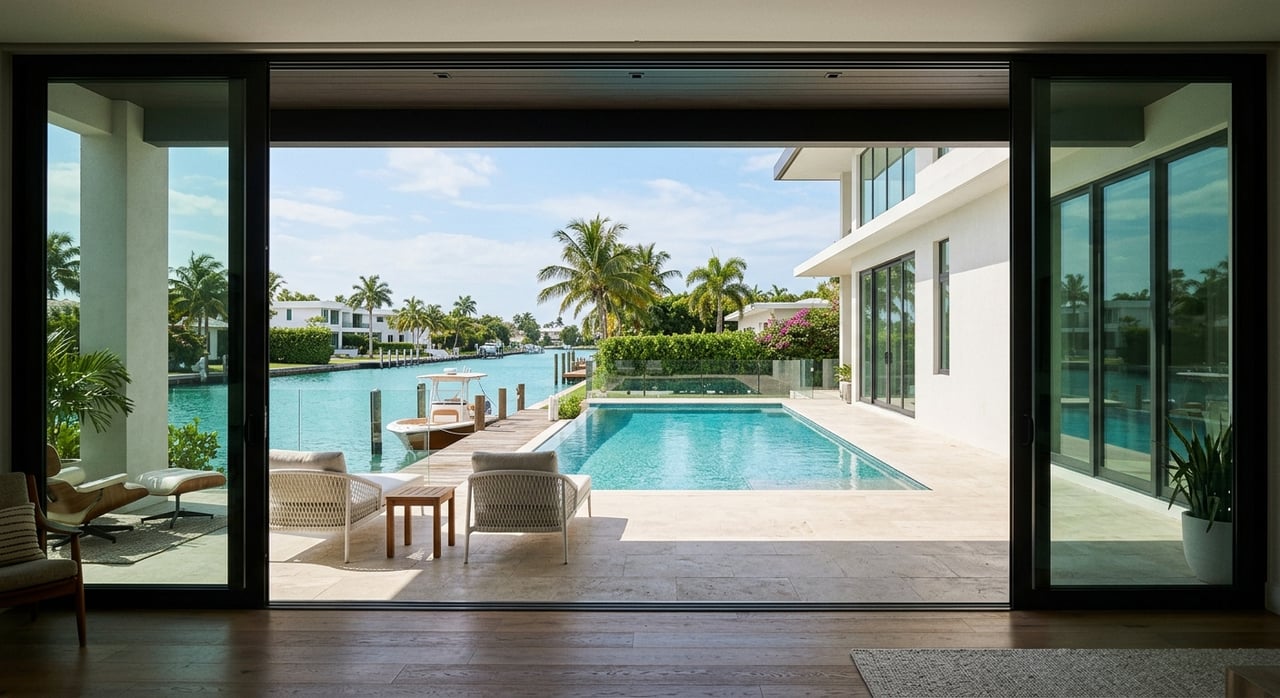
That geography gives you options. Some buyers want wide water views and a strong visual connection to the Intracoastal. Others prefer canalfront homes that offer a private dock setup and a boating-first lifestyle close to the main waterway.
Delray is also positioned between Boynton Inlet and Boca Raton Inlet. For boaters, that means your route to the ocean is part of daily life, not just a detail on a map.
If you are drawn to a more expansive waterfront feel, Intracoastal frontage often delivers the biggest visual impact. These homes can offer longer sightlines, stronger breezes, and a setting that feels more open than a narrower canal location.
In Delray Beach, areas such as North Beach and Seagate are closely tied to this east-side waterfront character. The city notes that both areas largely run from the Atlantic Ocean to the Intracoastal Waterway, giving them a rare relationship to both major waterfront edges.
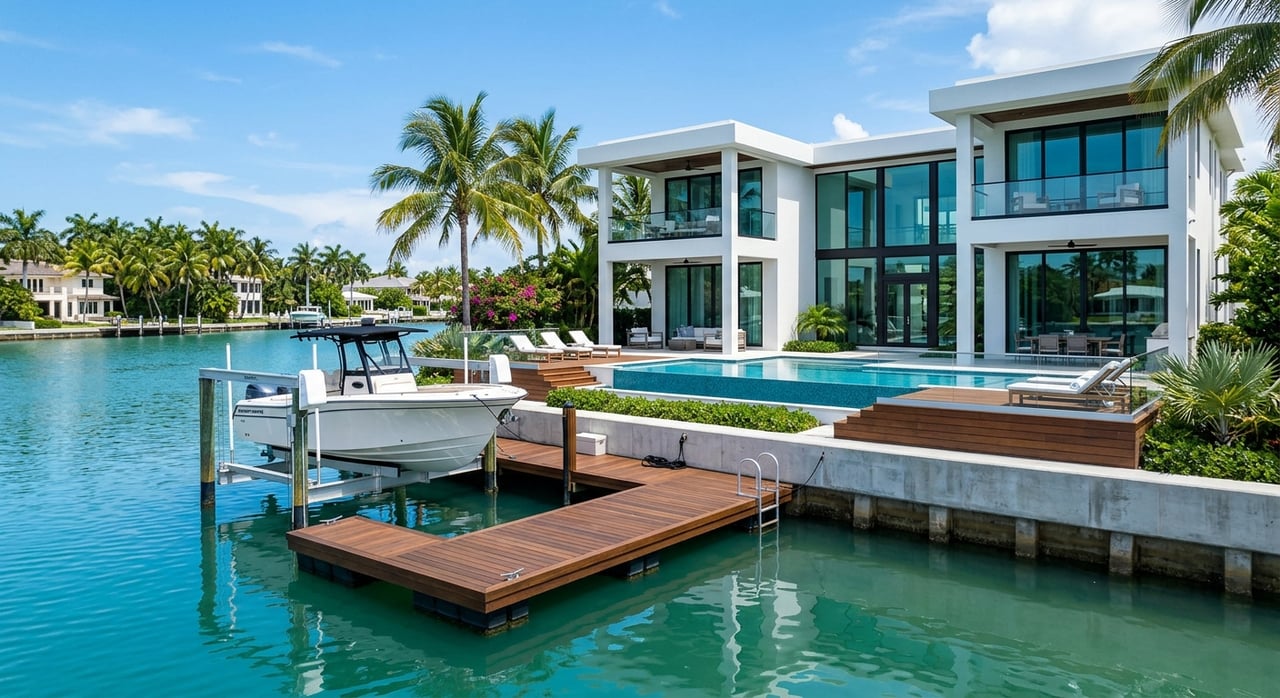
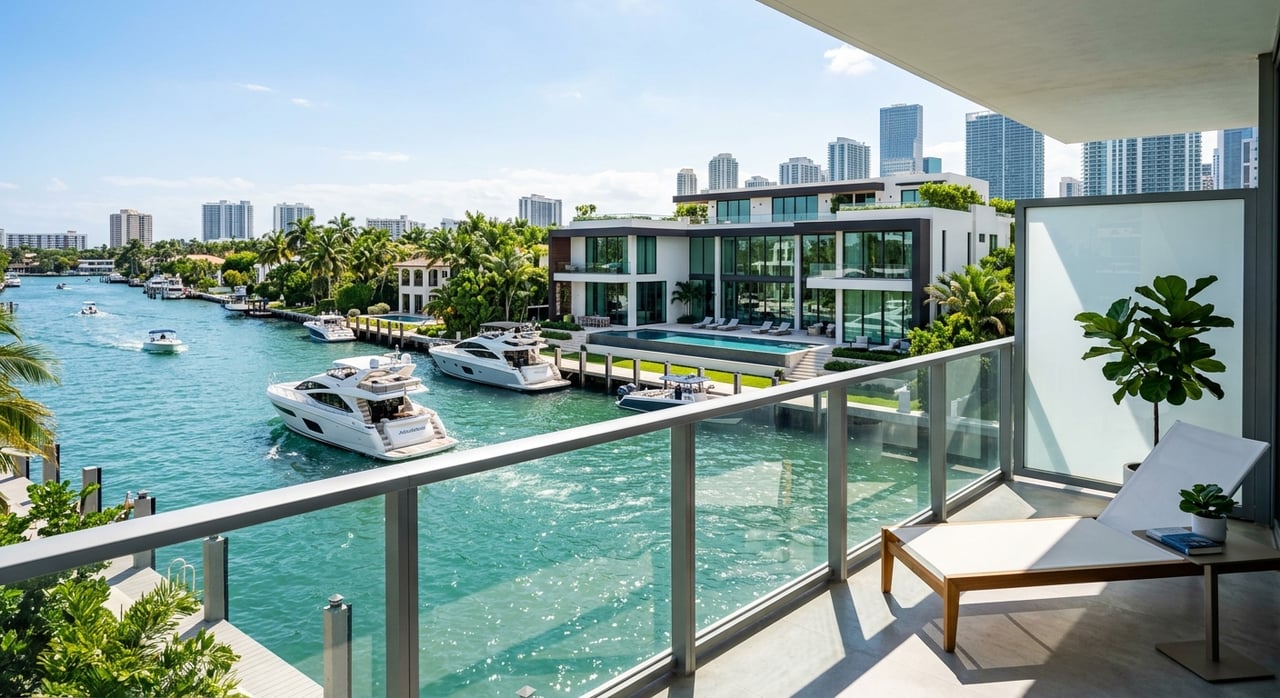
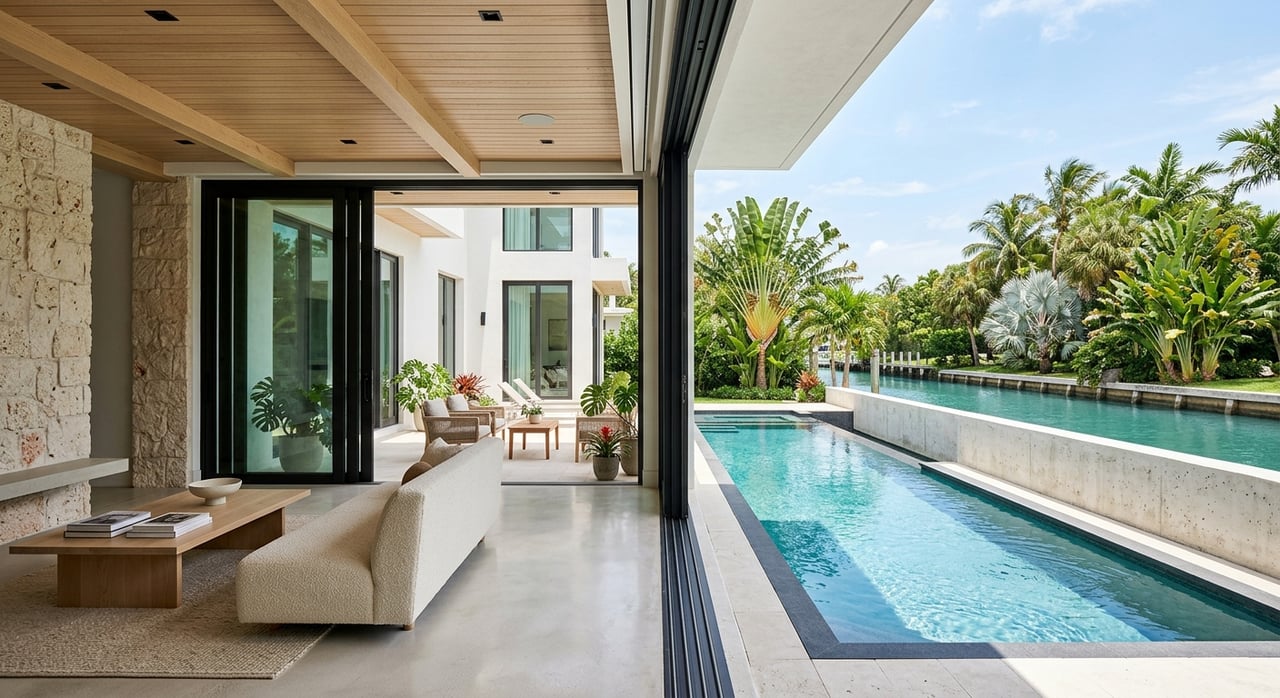
Canalfront properties often appeal to buyers who prioritize practical dock use. In neighborhoods connected to the Intracoastal by access channels, your focus may be less about broad open-water views and more about how easily your vessel fits, launches, lifts, and returns home.
Tropic Isle is one of Delray Beach’s clearest canalfront examples. The neighborhood sits adjacent to the Intracoastal Waterway and is especially relevant for buyers who want to evaluate boating convenience alongside long-term property conditions.
If you love entertaining around a dramatic water backdrop, Intracoastal frontage may feel like the better lifestyle match. If your priority is keeping your boat at home and getting on the water efficiently, canalfront living may make more sense.
The best choice usually comes down to how you plan to live. View, vessel size, maintenance tolerance, and route preferences all matter.
According to the city’s beach-property design manual, North Beach includes about 274 lots and Seagate about 164 lots. These neighborhoods are known for their east-side waterfront setting and a mix of architectural styles that includes Anglo-Caribbean/Key West, Florida-Bermuda, Florida Bungalow/Craftsman, Transitional Modern, Modern, Monterey, and Spanish-Mediterranean influence.
The same manual notes that homes in this district have historically been typically one-story. It also highlights how lot size, location, and views toward the ocean or Intracoastal shape the overall landscape character.
If you want an east-side waterfront setting with a more historic feel, the Marina Historic District offers a different kind of charm. It lies between East Atlantic Avenue and the Intracoastal Waterway.
City walking-tour materials describe its 1922 to 1943 building stock as a mix of Mediterranean and Mission Revival, Monterey, Florida Cottages, and Art Moderne. For buyers, that can translate into a lower-scale setting with strong architectural character near the water.
Tropic Isle is a key neighborhood for canalfront buyers to study closely. It is adjacent to the Intracoastal and strongly associated with boating access, but it is also central to Delray’s flood-resilience and infrastructure planning.
The city says the neighborhood is affected by high tides, king tides, and projected sea-level rise. It is actively raising streets, improving drainage, and adding backflow preventers to help keep canal water from backing up onto streets during high tides.
A beautiful waterfront home does not automatically mean an ideal dock for your boat. In Delray Beach, dock usability should be part of your home search from day one.
City code defines and regulates docks, finger piers, floating docks, boat lifts, mooring structures, and marinas. It also allows certain T-shaped and L-shaped finger-pier combinations when they meet technical standards.
When evaluating homes, you will often see setups like these:
Because these are regulated waterfront structures, you should confirm what is already permitted rather than assume an existing layout will work for your vessel. Projection, spacing, and condition all affect real usability.
In Delray Beach, a boat lift is treated as a regulated waterfront structure. That means it should be reviewed with the same care as the dock itself.
If a home is marketed as boating-ready, the real question is whether the current setup matches your boat’s size, draft, and day-to-day needs. A lift that works for one owner may not be ideal for the next.
For many waterfront buyers, bridge clearance is one of the most important practical filters. It can quickly determine whether a home fits your boating plans.
At Delray Beach, the Atlantic Avenue bridge has a 12-foot clearance and the Linton Boulevard bridge has a 30-foot clearance. Nearby, Boynton Beach’s East Ocean Avenue bridge has a 21-foot clearance, and Boca Raton’s Palmetto Park Road bridge has a 19-foot clearance.
If you own a larger vessel, these measurements are not minor details. They affect where you can comfortably travel along the Intracoastal and how easily you can head north, south, or out to the ocean.
Not every waterfront buyer wants full-time private dock maintenance. Delray Beach offers public options that can make the boating lifestyle more flexible.
The City Marina sits west of the Intracoastal just south of the Atlantic Avenue bridge. It provides 24 rental slips for boats from 30 to 55 feet.
The city also provides public boating access at Knowles Park, Mangrove Park, and Lakeview Park. Mangrove Park includes two ramps and staging docks, which can be especially useful if you want regular water access without taking on a private dock system at home.
In Delray Beach, waterfront ownership and flood preparedness go hand in hand. The city says its coastal geography creates vulnerability to tidal flooding, storm surge, and heavy rainfall.
That is why the city’s stormwater efforts include investments in seawalls, pump stations, drainage systems, and green infrastructure. It also notes that elevation certificates matter for flood insurance and compliance.
The city’s vulnerability analysis says 85% of waterfront parcels need seawall upgrades. That makes the seawall more than a background feature. It is a key part of the property’s condition, cost profile, and long-term planning.
In canalfront areas like Tropic Isle, waterfront living also connects to street elevation, drainage performance, and backflow prevention. In other words, your experience of the water includes what happens on the lot, at the dock, and on the road outside your home.
Luxury waterfront buying in Delray Beach is often about narrowing the search with the right questions early. The goal is not just to find a beautiful property. It is to find one that supports your actual lifestyle.
Here are a few smart filters to use:
These questions can save time and sharpen your search. They also help you compare homes based on use, not just appearance.
Delray Beach offers more than one version of waterfront living. Intracoastal homes, canalfront properties, historic east-side districts, and boating-access alternatives each create a different ownership experience.
The right property is the one that aligns your view preferences, vessel needs, maintenance expectations, and daily routine. When you understand those pieces together, you can buy with more clarity and confidence.
If you are exploring Intracoastal or canalfront homes in Delray Beach, the Tinka Ellington Group offers private, concierge-level guidance tailored to South Florida waterfront buyers.
Stay up to date on the latest real estate trends.
We are committed to guiding you every step of the way—whether you're buying a home, selling a property, or securing a mortgage. Whatever your needs, we've got you covered.
Luxury Presence
101 N Federal Hwy 5th Flr Boca Raton FL 33432