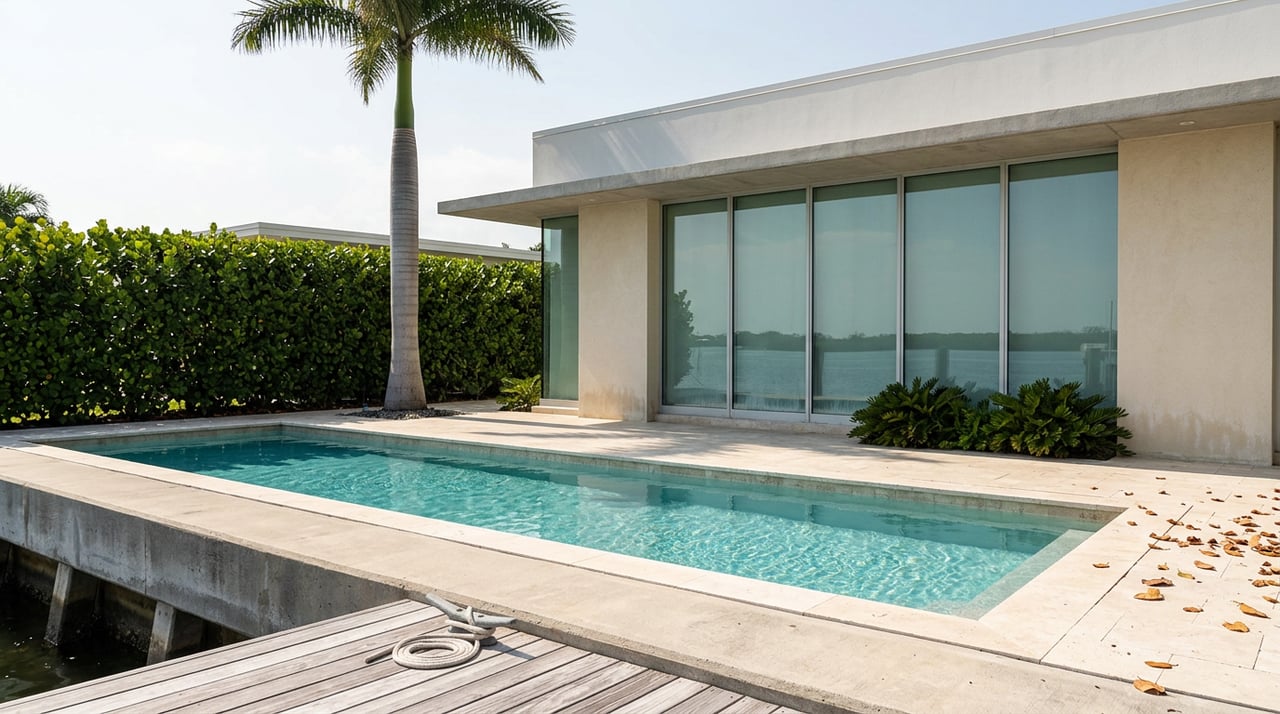
The Median Price in Lighthouse Point Doesn't Include the Seawall
September 24, 2026
September 24, 2026
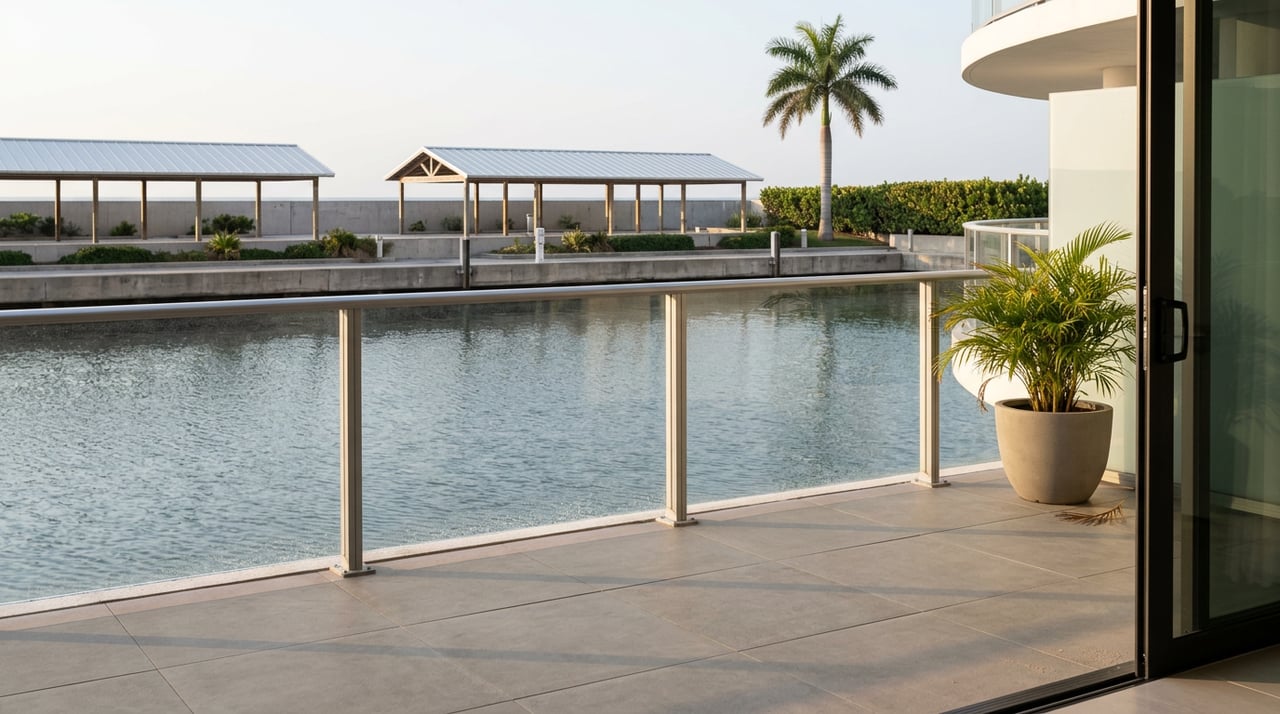
A buyer walks a canal-front lot in Lighthouse Point, likes the house, likes the 80 feet of dockage out back, and asks the obvious question: how old is the seawall. The answer determines almost nothing about the sale price and almost everything about what happens after closing. If that seawall needs work and the work crosses a specific threshold, Broward County stops treating it as a repair. It becomes a full legal replacement, with an engineer of record and a state and federal review process attached. Nobody prices that into a listing. Nobody puts it on a comparison chart. It shows up during due diligence, and by then the buyer has already fallen for the house.
That gap between what the price shows and what the property actually costs is the real story of this market right now, and it starts before you even get to the seawall.
Lighthouse Point is small enough that a single month's closings can swing the headline number in ways that don't hold up under a second look. In August 2026, the median sale price for a single-family house here was $2,250,000, based on 19 closings recorded in BeachesMLS. In that same month, the median sale price for a condo or townhouse was $160,000, based on 10 closings. Those are not two ends of one spectrum. They are two different products being sold to two different buyers, and any blended citywide figure that averages them together is going to land somewhere that describes neither.
That blending is exactly what happens on the big portals. One widely used estimate puts the average home value across all property types in Lighthouse Point at roughly $771,700 as of late July 2026, up less than one percent year over year. That number is real, but it is doing the same thing a median household income figure does when you average a hedge fund manager's paycheck with a barista's. It tells you the town has both kinds of housing stock. It tells you almost nothing about what a waterfront house actually trades for.
That gap between segments is exactly why a small market like this one needs to be read house by house, not by headline.
Here is the split that matters if you are actually shopping:
| Segment | What the recent data shows | Time window |
|---|---|---|
| Single-family houses | Median sale price $2,250,000 (19 sales) | August 2026 |
| Condos and townhouses | Median sale price $160,000 (10 sales) | August 2026 |
| All property types, average value | $771,700, up 0.6% year over year | As of July 31, 2026 |
As of September 15, 2026, the city had 71 houses for sale with 26 under contract, and 63 condos or townhouses for sale with 10 under contract. Over the trailing twelve months ending in August 2026, roughly two out of every three closings were houses rather than condos, a meaningfully house-heavy mix for a coastal Broward market and the segment worth watching if dockage, not just water views, is the point of moving here.
Once you're inside the single-family segment, the water itself starts setting terms. Lighthouse Point's dock rules are tied directly to canal width, with a 100-foot breakpoint used to cap how large a dock can be and how far it can extend from the seawall. Intracoastal-fronting parcels play by a different rule entirely, with allowances running up to a 46-foot extension under the city's ordinance. Two houses with identical square footage and identical asking prices can carry very different boating capacity depending on which side of that breakpoint their canal falls on, and that distinction almost never shows up in a listing description the way it should.
This is where a boater's must-haves and a swimming pool buyer's must-haves diverge completely. A buyer chasing dockage for a sportfisher needs to know the canal width before writing an offer, not after. A buyer who wants water views and a pool doesn't need to think about any of this. The same waterfront zip code is quietly running two different transactions depending on which of those buyers walks through the door.
Here is the mechanism that actually determines cost after closing, and it has nothing to do with square footage.
Under Broward County's resiliency code, a seawall repair that covers more than 50 percent of the shoreline length, or that costs more than 50 percent of the value of the flood barrier along that shoreline, is legally reclassified as a full replacement rather than a repair. Once that threshold is crossed, the entire wall along the full shoreline has to be rebuilt, not patched, which brings in a structural review, an engineer of record, and, whenever the work touches the waterway itself, review from the Florida Department of Environmental Protection and the Army Corps of Engineers.
This is not a hypothetical for older canal-front housing stock. Seawalls installed decades ago are exactly the ones most likely to need work that crosses that 50 percent line, which means the age of the seawall, not the age of the house, can be the more relevant number in a due diligence file. The city's own building department requires a full permit package for any dock, seawall, or boat lift work, including signed and sealed engineering plans and documented approval from outside agencies like Broward County, the DEP, or the Army Corps, before a permit is even issued. You can see exactly what that packet requires on the city's own dock, seawall, and boat lift permit checklist.
None of this is disclosed on a sale sheet. It surfaces when a buyer orders an inspection, or when an insurer asks a question the buyer wasn't expecting.
Lenders and insurers have started requesting elevation certificates and seawall inspection reports as standard due diligence on Broward waterfront property, tied to how flood coverage gets priced under the National Flood Insurance Program's newer Risk Rating 2.0 model. That means the seawall question a buyer might otherwise defer until after closing can now show up earlier, inside the financing and insurance timeline, where a stalled answer stalls the whole deal.
For a seller, this cuts the other way. A seawall with documented permits, a recent inspection, and no open resiliency-code exposure is a selling point that belongs in the listing narrative, not buried in a disclosure packet. For a buyer, it means the real comparison between two canal-front houses isn't the price per square foot. It's the permit history sitting behind the seawall.
If you're comparing Lighthouse Point to another Broward waterfront town, start by asking which segment a quoted median actually describes. A blended, all-property median tells you almost nothing about what a single-family canal house costs this month. Ask for the house-only figure, and ask how many sales it's built on, since a market this size can shift on a handful of closings.
Then ask three questions before you get attached to a specific address:
Those three answers will tell you more about what you're actually buying than any median price this market publishes.
What counts as a "substantial repair" under Broward's resiliency code? Work is treated as a full replacement rather than a repair once it covers more than 50 percent of the seawall's shoreline length, or once its cost exceeds 50 percent of the value of the flood barrier along that shoreline.
Does dock size depend on my specific canal or on a citywide rule? Both. The city sets a general framework, but the 100-foot canal-width breakpoint means your specific waterway determines your dock's allowable size and extension, and Intracoastal frontage follows a separate standard.
Why do median home prices for Lighthouse Point vary so much depending on where you look? Because different sources report different property mixes and different time windows. A figure that blends houses and condos in a small market can move sharply from month to month, while a house-only or condo-only figure tells a steadier and more useful story for anyone shopping a specific product type.
Waterfront due diligence in a canal town like this one rewards the buyer who asks about the seawall before the offer, not after. If you're weighing a Lighthouse Point canal home against another stretch of the Boca Raton to Pompano Beach corridor, the Tinka Ellington Group can walk the permit history with you before you write a number down. Request a Private Consultation to start there.
Stay up to date on the latest real estate trends.


We are committed to guiding you every step of the way—whether you're buying a home, selling a property, or securing a mortgage. Whatever your needs, we've got you covered.
Luxury Presence
101 N Federal Hwy 5th Flr Boca Raton FL 33432