Deerfield Beach Ocean Access and Bridges for Boaters
December 11, 2025
December 11, 2025
Shopping for a Deerfield Beach waterfront home with your boat in mind? Ocean access here is about more than a canal view. Bridge types, clearances, tides, and the Hillsboro Inlet all shape how easily you can get offshore. In this guide, you’ll learn how bridges and local water conditions affect vessel size, routing, and everyday convenience so you can choose the right property with confidence. Let’s dive in.
Deerfield Beach sits along the Intracoastal Waterway on Broward County’s east side. You will travel north or south on the ICW to reach an inlet for ocean access. For most Deerfield Beach routes, the Hillsboro Inlet is the go-to gateway to the Atlantic.
Transit time from a given property varies. It depends on speed zones, traffic, and how many bridges you must pass. Fewer bridges usually means faster, simpler trips.
Hillsboro Inlet is the primary federal inlet serving northern Broward County, including Deerfield Beach, Pompano Beach, and Hillsboro Beach. Boaters use it for fishing runs, cruising days, and offshore passages. Your location along the ICW and any required bridge openings can make that run a few minutes or stretch it to 20-plus minutes, especially at busy times.
Plan conservatively when you estimate time to the ocean. Bridge waits, no-wake zones, and marina traffic can add up.
Fixed high-level bridges provide a set vertical clearance. Many in South Florida offer roughly 40 to 65 feet. If your air draft is below that number, you pass through without stopping.
Some neighborhood bridges are lower, often under 25 to 30 feet, which can be a hard stop for taller vessels. A 1 to 2 foot tide swing can be the difference between clearing a span or waiting for an opening elsewhere on your route. Always compare your boat’s air draft to the exact posted clearance for each fixed bridge you’ll pass.
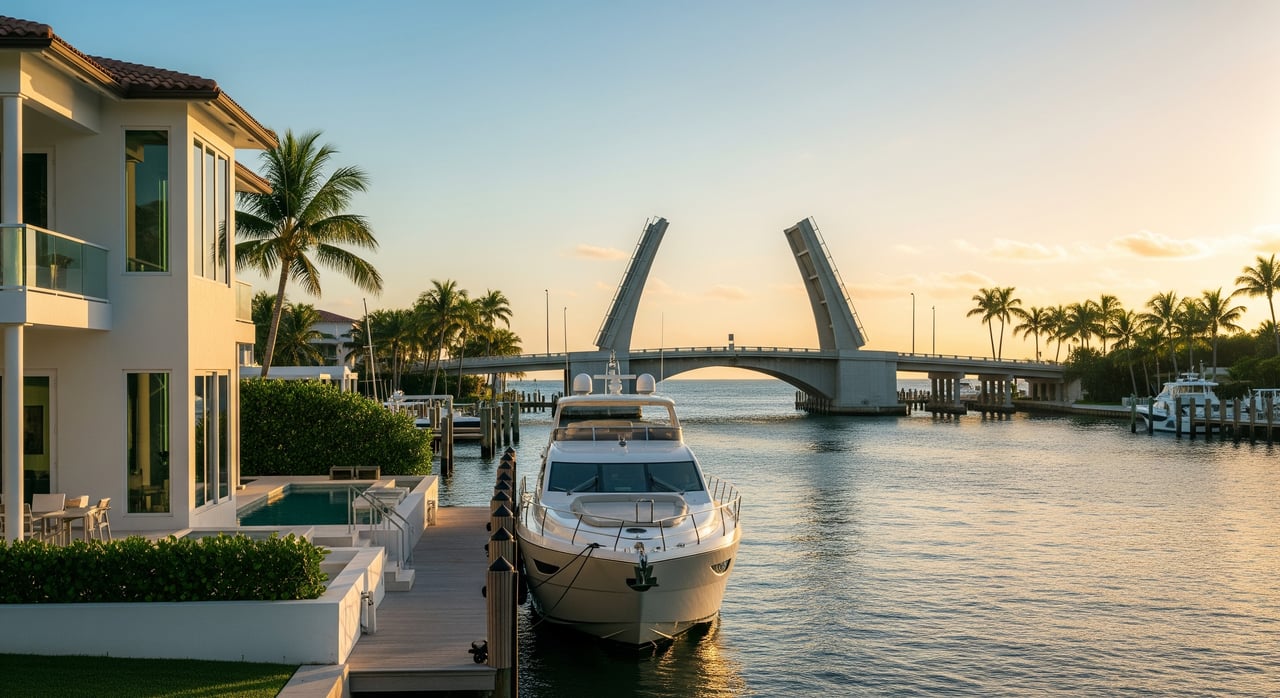
Bascule drawbridges in Broward County open to give you full vertical clearance. When closed, they often allow only 10 to 30 feet of clearance. If your air draft exceeds that, you will need an opening.
Many drawbridges on the ICW open on demand, but rules vary. Some have restrictions during commuter hours or special events. Check the specific operating schedule before you commit to a daily routine that depends on openings.
Drawbridge operations are regulated by federal and local rules. Some bridges open 24-7 on demand, while others have limited hours or require advance notice. If your boat needs openings, factor that into your daily timing, especially for early departures, tournament mornings, and quick sunset runs.
Every opening can add wait time and break your rhythm. If frequent ocean access is part of your lifestyle, minimize the number of drawbridges between your dock and the Hillsboro Inlet.
Broward’s typical tide range is modest, often around 1 to 2 feet. That may sound small, but it matters when your clearance is tight. A higher tide can turn a comfortable margin into a no-go under a low fixed span.
Plan around the tide when your air draft is close to a bridge’s posted clearance. Build in a cushion for seasonal sea level changes, wind-driven water levels, and king tides.
Hillsboro Inlet is a maintained federal channel, but it still demands attention. Expect stronger currents at ebb and flood, and respect any shoaling areas. Timing your transit near slack water can make maneuvering easier, especially for less-experienced operators or when wind and swell pick up.
If you’re new to the inlet, ask a local marina or towboat operator about current channel conditions, recent dredging, and any shifting sand. A short conversation can save you a long day.
Your boat’s height above the waterline is the critical number. Measure it carefully under normal load.
Properties that front the ICW and sit closer to the inlet often mean fewer bridges and faster ocean access. Homes that require several bridge transits add time and potential delays. There is no single best choice, only the best match for your vessel and how you boat.
If you plan frequent offshore days, look for routes with high fixed clearances and minimal drawbridges. If you own a taller vessel, focus on properties with direct access and fewer low fixed spans.
Use this step-by-step approach when you evaluate a waterfront listing:
Air draft under 10 to 12 feet usually clears many closed drawbridges and lower fixed spans. Your route is likely straightforward from most Deerfield Beach canals. Expect quick ocean access, assuming reasonable traffic and minimal bridge waits.
Air draft around 40 feet or more often requires high fixed bridges or drawbridge openings. You will benefit from properties closer to the inlet or with fewer low spans. Plan around tides and published opening schedules to keep trips predictable.
Air draft between 18 and 25 feet may clear some closed bascules but not low fixed bridges. Your comfort improves with higher fixed spans and fewer mandatory openings. Build in extra time for bridge queues on busy weekends.
Bridges, tides, and the Hillsboro Inlet define your daily boating experience. The right home is the one that fits your vessel’s air draft and minimizes surprise delays. A careful clearance check and a realistic route plan will pay off every time you head to the ocean.
If you want a waterfront search tailored to your boat and lifestyle, the concierge team at the Tinka Ellington Group can help you evaluate routes, clearances, and access tradeoffs across Deerfield Beach and nearby coastal markets. Request a Private Consultation to get started.
Stay up to date on the latest real estate trends.
We are committed to guiding you every step of the way—whether you're buying a home, selling a property, or securing a mortgage. Whatever your needs, we've got you covered.

Luxury Presence
101 N Federal Hwy 5th Flr Boca Raton FL 33432