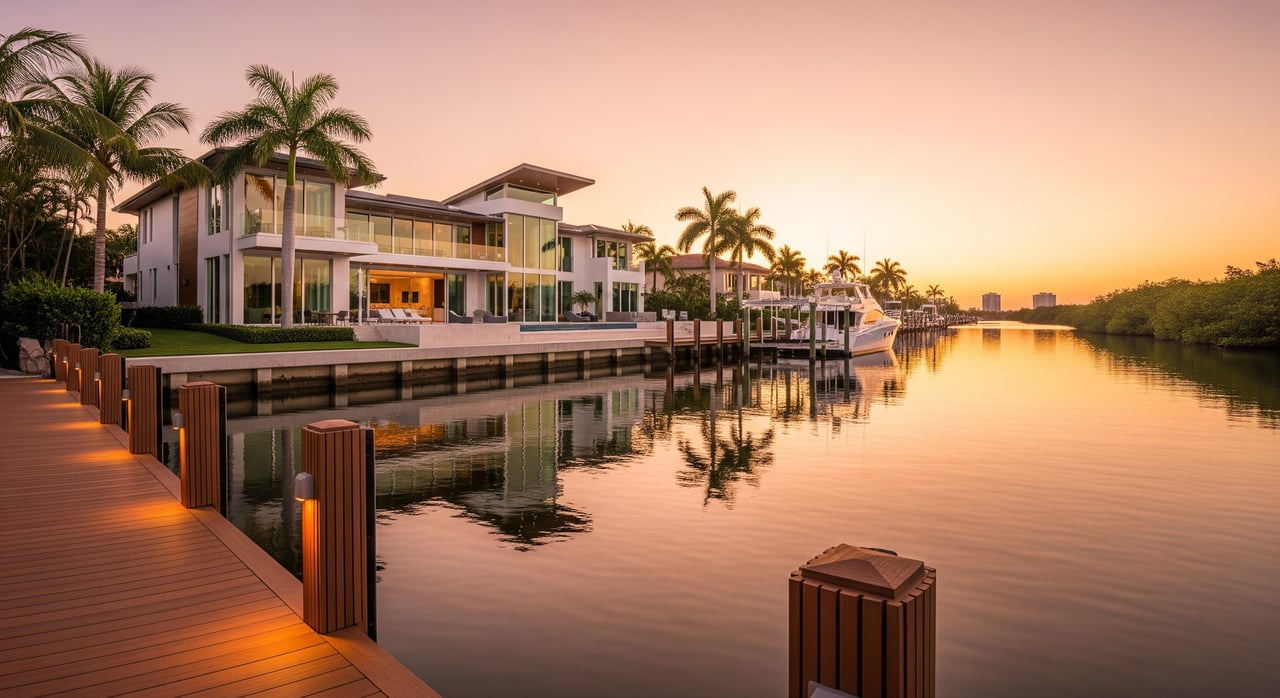
Waterfront Home Value Drivers in Lighthouse Point
December 18, 2025
December 18, 2025
Why do two homes on the same canal sell at very different prices? In Lighthouse Point, value lives on the water. If you understand how boat access, dockage, and seawall health translate to daily use and long-term costs, you can price and negotiate with confidence. In this guide, you will learn the specific drivers of waterfront value, what to verify before you buy or list, and how to compare properties the way seasoned coastal buyers do.
Let’s dive in.
For many Lighthouse Point buyers, boating access is the number one value driver. Wider canals and nearby turning basins allow larger vessels to maneuver safely and dock with less risk. Narrow canals limit options for big boats and can shrink your buyer pool.
Proximity to an ocean inlet matters if you fish offshore or cruise. A shorter run to open water, with no fixed bridges and adequate depth, usually commands a premium. Always confirm bridge clearance and any drawbridge schedules along your route.
Depth at the dock at low tide is critical. Shallow slips restrict vessel size and can limit year-round use. Ask for recent depth soundings or dredging history and check for any known shoaling patterns.
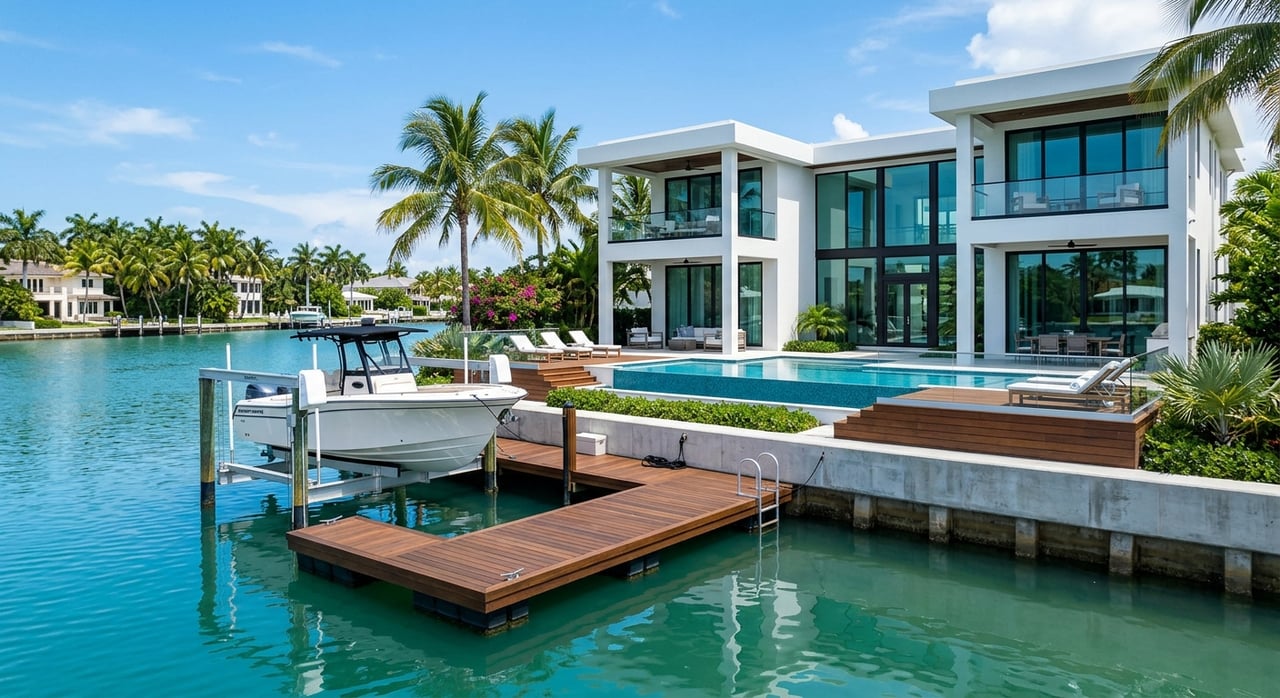
Dock length, structural condition, and permitted lifts influence both price and marketability. Longer docks with adequate depth and a properly permitted lift reduce day-to-day friction and cost. Multiple mooring options can be a plus for households with more than one vessel.
Verify the measured dock length, materials, permit history, and any encroachments. Buyers often assign a premium to a durable, move-in-ready dock and lift compared to a property that needs immediate work.
Lot orientation shapes light, views, and privacy. Many buyers favor east-facing exposure for sunrise light and cooling afternoon shade. Wider water frontage increases dock flexibility, improves privacy from neighbors, and enhances the feeling of open water.
Corner lots and deeper sites often support larger outdoor living areas, more creative landscaping, and easier dock placement. Confirm setbacks and any easements that could affect dock design.
A sound seawall protects the property and underpins value. A failing or outdated seawall can deter buyers and complicate insurance. Finished floor elevation relative to flood requirements influences both risk and carrying costs.
Request inspection records, age and material details, and any recent permits. Know your FEMA flood zone and base flood elevation, and note any history of nuisance flooding. These factors affect insurability, financing options, and resale.
Homes that integrate indoor and outdoor spaces, orient main rooms to the water, and meet current hurricane standards tend to sell at higher prices per square foot. Recent upgrades to roofs, impact windows or shutters, HVAC, and electrical systems support stronger offers.
Confirm the scope and permits for renovations. Buyers value verifiable improvements and hurricane mitigation features that can support windstorm credits.
In coastal Broward County, wind and flood insurance are material budget items. Premiums, deductibles, and availability can change with risk maps and building features. Clarify likely costs up front and identify any mitigation credits.
Dock, lift, and seawall projects typically require approvals from the City of Lighthouse Point, Broward County, and state or federal agencies for certain in-water work. Timelines and restrictions can affect your project plan and transaction timing.
Local zoning and any HOA covenants influence allowable uses, dock standards, design changes, and rental rules. Short-term rental limits can affect investor demand and income projections. Always verify regulations that apply to your specific property.
When selecting comparables, match on water access first. Adjust for canal width, depth, inlet proximity, and dock capacity before you consider renovations or lot size. Street character, proximity to marinas and dining, and typical boat traffic can influence pricing and days on market.
Buyers in South Florida are increasingly evaluating resilience, from king tide exposure to local mitigation plans. Repeated flooding and expected future upgrades can influence pricing, lending, and the pace of resale.
Use these illustrative weightings to structure your analysis. Your priorities may shift based on how you boat and live.
When adjusting comps, start with usable water access, then dock capacity and depth, then lot frontage and orientation, then condition and renovation level, followed by regulatory or insurance differences. Document each adjustment with measurable facts like dock length, canal width, depth at mean low water, and estimated minutes to the inlet.
Start with the boat. Match your vessel length, draft, and mast height to canal width, depth at low tide, and bridge clearances. If you plan to upsize your boat, plan for tomorrow’s needs too.
Time your run. Estimate minutes to the inlet and confirm if any bridges open on a schedule. Shorter, bridge-free runs often justify higher prices for active boaters.
Measure the dock. Check linear feet, mooring options, and lift specs. Confirm permits and condition so you are not buying a near-term project by surprise.
Inspect the seawall. Review age, material, and inspection results. Consider elevation, flood zone, and any mitigation features that may influence insurance and peace of mind.
Weigh lifestyle fit. Look at lot orientation, privacy, and outdoor living space. Then factor in the home’s renovation level and hurricane protection.
Adjust for carrying costs. Model insurance and maintenance alongside price so you compare total cost of ownership, not just list prices.
Lighthouse Point sits within Broward County’s coastal corridor, shaped by an extensive canal network, the Intracoastal Waterway, and quick access to ocean inlets. The supply of deep-water, large-lot properties is limited, and that scarcity supports premiums for homes with superior dockage, wider canals, and shorter routes to open water. Buyers here evaluate both the boating experience and the lifestyle at the water’s edge, from views and privacy to outdoor living.
Waterfront value in Lighthouse Point is nuanced and highly property specific. The right advisor helps you verify the facts that matter, price with precision, and position your home to capture a premium. For concierge guidance on buying or selling along the canals, connect with the Tinka Ellington Group. Request a Private Consultation.
Stay up to date on the latest real estate trends.

We are committed to guiding you every step of the way—whether you're buying a home, selling a property, or securing a mortgage. Whatever your needs, we've got you covered.
Luxury Presence
101 N Federal Hwy 5th Flr Boca Raton FL 33432